The Economics of Assurance: How HIL Testing Minimizes Risk and Maximizes ROI for Complex Products
Highlights
- HIL testing connects real hardware to a simulated environment to validate embedded systems before deployment, closing the gap that pure software simulation can’t.
- Electronics- and electrical-related defects are now the fastest-growing cause of product recalls, rising roughly 30% annually since 2013.
- Catching a defect during testing instead of after release can cut fix costs by up to 100x.
- The HIL testing market is projected to reach $2,230.7 million by 2032, with some analysts projecting 8.3% CAGR growth through 2034.
- Bosch SDS supports HIL testing with TFMS, Remoted, and VRCS, enabling secure, 24/7 remote testing from anywhere.
- HIL is expanding beyond automotive into power electronics, medical devices, and industrial robotics.
Introduction
Modern products, from consumer electronics to industrial machinery, integrate a wide array of technologies to meet rising consumer expectations for safety, reliability, and customization. However, this push for innovation comes with its own set of challenges, particularly in ensuring the seamlessness and safety of such complex systems.
In a market where time-to-market pressures and competition are fierce, businesses are under constant pressure to rethink their product development strategies. This includes adopting advanced testing methodologies to mitigate risks, streamline development processes, and optimize resources.
The need for a comprehensive development toolchain, complemented by automated testing and agile practices, has become imperative. Case in point: companies leveraging these methodologies have witnessed 30-40% productivity gains (Source: McKinsey).
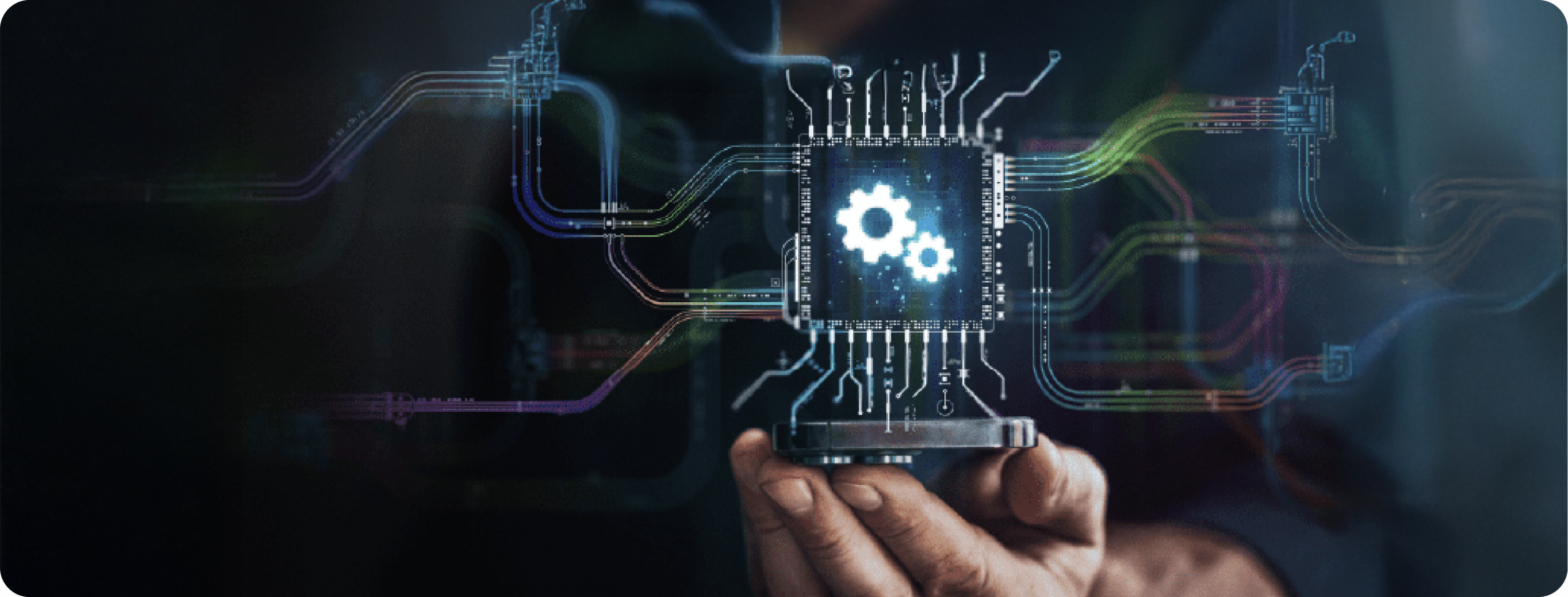
Enter Hardware-in-the-Loop (HIL) testing, a game-changing approach that enhances the reliability of embedded systems by simulating real-world conditions. HIL testing not only facilitates more efficient development but also reduces costs associated with product failures and post-launch issues.
What Trends Are Driving HIL Testing Adoption?
The hardware-in-the-loop (HIL) testing market is poised for significant growth, projected to reach $2,230.7 million by 2032 (Source: Yahoo Finance). This growth reflects increased demand across industries for reliable, effective testing of embedded systems, driven by several key market factors:
- Increasing complexity of embedded systems: Embedded systems are now expected to handle more functions and integrate with various other devices and platforms. A modern vehicle alone runs on roughly 100 million lines of code across as many as 100 electronic control units (Source: IEEE Spectrum). HIL testing helps ensure these complex systems perform correctly before full deployment.
- Rise of autonomous and connected systems: As autonomous vehicles and interconnected devices become more common, rigorous testing for safety, responsiveness, and interoperability is essential. HIL testing plays a critical role in validating these capabilities in real-world scenarios.
- Growing focus on safety and reliability: Safety standards continue to tighten, especially in sectors like automotive and industrial machinery, driving demand for robust, reliable testing methods such as HIL.
- Advances in simulation technology: Improved simulation tools allow HIL systems to recreate complex, realistic conditions, making them ideal for testing high-stakes applications without the risk of failure in the real world. Related: see how our digital twin solutions extend this simulation approach further.
- HIL testing expansion into non-traditional industries: Beyond aerospace, defense, and automotive, industries such as energy and marine technology are adopting HIL to enhance system performance and reliability.
Where Is HIL Testing Used in Industry?
HIL testing has proven its value across diverse industries:
- Power grid reliability: Enterprises in the power industry leverage HIL to test system reliability, ensuring stability across the grid and minimizing disruptions. HIL testing supports real-world scenario modeling to evaluate and optimize power grid operations (Source: Powermag), helping power plant personnel ensure project success and resilience.
- Automotive ADAS/AD validation: Bosch SDS uses HIL systems to validate advanced driver assistance systems (ADAS) and automated driving (AD) systems. By simulating various driving conditions, HIL allows for thorough testing of safety-critical systems, from standard maneuvers to complex, unpredictable situations.
These use cases highlight how HIL testing continues to evolve and extend its reach into new, non-conventional industries, becoming an indispensable tool for ensuring system reliability, safety, and performance.
Is HIL Testing Worth the Investment?
When considering hardware-in-the-loop (HIL) testing, organizations must weigh financial and operational factors to assess the overall return on investment (ROI). While HIL testing can be a substantial upfront investment, its long-term benefits often justify the initial costs.
What Are the Challenges of Implementing HIL Testing?
- Gaps in tech maturity: Many organizations still rely on legacy infrastructure and processes that struggle to keep up with modern system complexities. Developing a real-time simulation environment requires advanced capabilities that outdated systems cannot support, leading to potential delays or inaccuracies in testing.
- Data challenges: HIL testing demands robust data management from collection to storage and analysis. Outdated methods can hinder data accuracy and reliability, creating challenges for effective decision-making.
- Higher upfront costs: Implementing HIL involves significant initial investment in specialized hardware, software, and skilled personnel, including budgeting for training and ongoing support.
- Integration issues: HIL requires integration across disparate systems, technologies, and sometimes a broad network of vendors. Misalignment or incompatible technologies can lead to costly delays or require additional resources to bridge compatibility gaps.
- Compliance challenges: HIL testing environments must adhere to evolving global regulations, which vary by region and industry. Failure to meet these requirements can result in regulatory penalties, product recalls, and reputational damage.
Inadequate alignment of people, processes, and technology can lead to significant repercussions, including product recalls, budget overruns, and potential safety issues. Avoiding these outcomes requires a multidimensional approach that integrates organizational alignment, standardized processes, and the right tools to handle increasing system complexities.
What Are the Benefits of HIL Testing?
Despite these challenges, the benefits of HIL testing often outweigh its initial costs, enhancing both short-term and long-term outcomes:
Improved product outcomes:
- HIL testing enables businesses to deploy highly reliable systems, directly supporting stronger customer trust and reduced post-launch support costs.
- Long-term savings: Detecting faults early in the design and testing phases helps reduce the need for rework, post-launch failure resolutions, and other costly issues. Fixing a defect during the testing phase can cost up to 15 times more than fixing it during design, and up to 100 times more once the product has already reached the field (Source: IBM Systems Sciences Institute, via Black Duck).
- Accelerated time-to-market: With optimized frameworks for HIL testing, companies can execute testing more efficiently, enabling faster go-to-market rates and faster revenue generation.
- Lower risk of recalls: Thorough HIL testing reduces the risk of product failures and recalls, which can have far-reaching financial and reputational consequences.
- Enhanced product quality: Testing complex systems in a controlled environment results in products that meet higher standards of quality and reliability.
- Compliance and risk mitigation: HIL testing environments help organizations meet stringent regulatory requirements and mitigate risks associated with non-compliance, safeguarding both the brand and the bottom line.
Through this cost-benefit analysis, it becomes evident that the long-term advantages of HIL far outweigh the initial investment, offering companies a powerful tool for maximizing ROI, enhancing product quality, and minimizing risks.
What's Next for HIL Testing?
The future of HIL testing is shaped by emerging technologies and evolving industry needs. Digital twin technology, which creates a virtual replica of physical systems, is increasingly integrated with HIL to enhance testing accuracy and efficiency. This combination enables real-time feedback and continuous improvement, making testing processes more dynamic and reliable.
HIL testing is spreading its roots beyond automotive into power electronics, industrial robotics, and medical devices. It is set to become a cornerstone in ensuring critical components across these sectors meet evolving performance and safety standards.
Its growing prevalence can be seen in smart grid technologies, renewable energy systems, and power conversion devices in the power industry; in the health industry, integrated control systems, software regression testing, and simulated drug/device delivery scenarios are key areas of application.
As robots become more advanced and autonomous, HIL is also being used to gauge risk control software, safety systems, and version control in industrial robotics.
In the coming years, HIL platforms are expected to become more scalable and flexible, accommodating the growing complexity of modern systems without requiring extensive infrastructure overhauls. The move toward open architecture and modular systems will further enhance HIL’s adaptability, allowing organizations to customize their testing environments to specific project requirements. Additionally, virtual HIL testing is set to gain prominence as remote work becomes more prevalent, enabling decentralized teams to collaborate and test effectively regardless of physical location.
Transform Testing with Bosch SDS
Bosch SDS is at the forefront of V&V transformation, offering state-of-the-art HIL testing solutions that empower businesses to navigate the complexities of new-generation product development.
Test Farm Management System (TFMS) is a web-based application for monitoring and managing test PCs, development PCs, HIL systems, and lab cars. Developed by Bosch SDS to maximize resource utilization through a “work from anywhere” approach, it elevates testing efficiency with real-time status updates and features such as Wake-on-LAN (WOL) and over-the-air (OTA) updates, while maintaining optimal security through access control. Beyond improved productivity and resource utilization, enterprises can also conduct more secure and globally compliant testing.
Remoted, a lab digitalization initiative by Bosch SDS, enables remote testing and debugging of software, hardware, and test equipment. Product engineers get 24/7 access to lab resources as if physically present, regardless of location. Alongside a central database for labs and a common platform for status monitoring, it improves test automation and end-product quality before market release.
Virtual Remote-Control System (VRCS) is designed for remote access and control of test setups anytime, anywhere. VRCS makes location-independent testing possible, improves resource utilization, and speeds up the development and testing cycle, enabling product engineers to remotely monitor and control test setups, execute tests, and analyze results, and collaborate seamlessly with colleagues regardless of physical location.
With Bosch SDS’s expertise, organizations can build an advanced HIL ecosystem to develop safer, more reliable, and more profitable products, mitigating risk while maintaining a competitive edge. Learn more about our verification & validation testing services, or explore related solutions in asset performance management and smart factory solutions.


HIL vs. SIL Testing at a Glance
| SIL Testing | HIL Testing | |
|---|---|---|
| Environment | Fully simulated, no physical hardware | Real hardware connected to a simulated environment |
| Best for | Early-stage logic and algorithm validation | Real-world timing, signal, and integration validation |
| Cost | Lower, no specialized hardware required | Higher upfront, specialized hardware and lab infrastructure |
| Typical stage | Early development | Pre-deployment / integration testing |